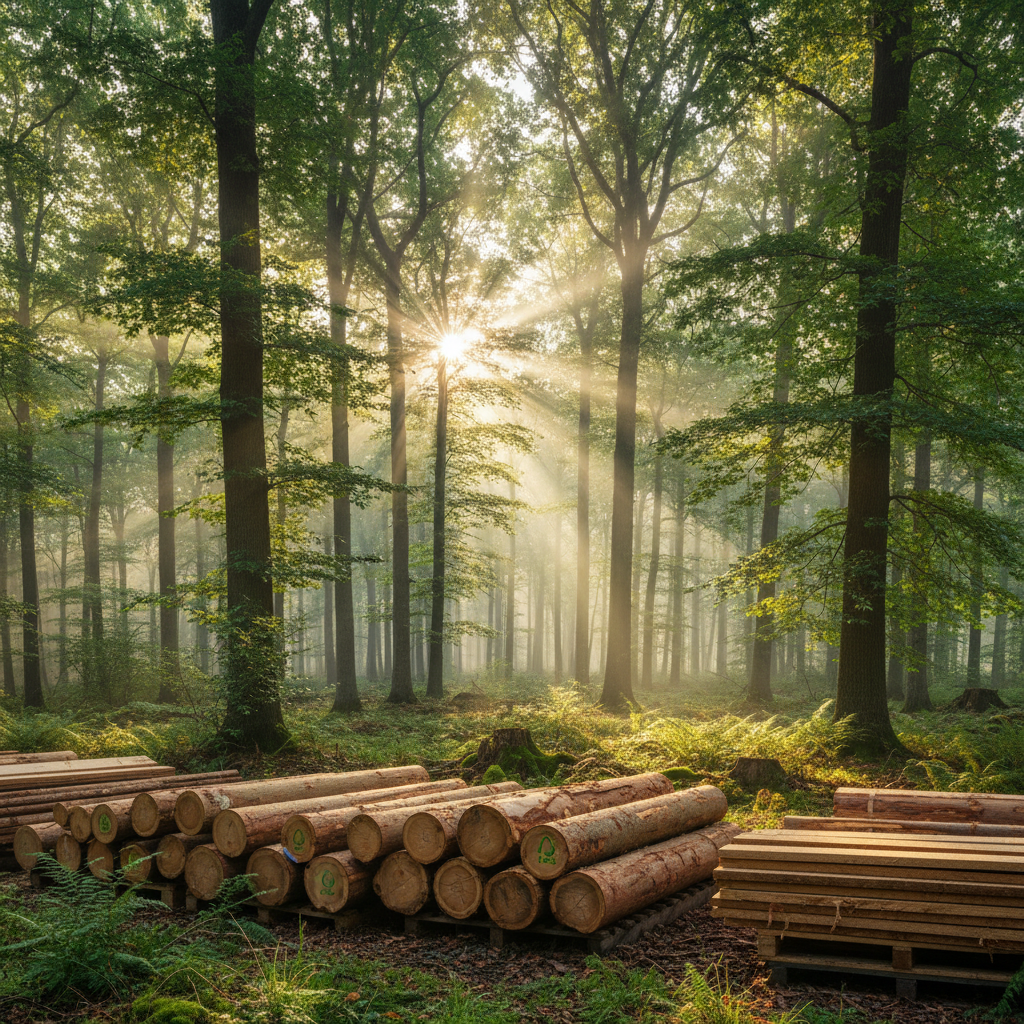
Why Sustainable Sourcing Matters
Timber is one of the most sustainable building materials on the planet — when sourced responsibly. Unlike steel, concrete or plastic, trees are a renewable resource that absorb carbon dioxide as they grow. A cubic metre of timber locks up approximately one tonne of CO2, making responsibly sourced wood a genuinely carbon-negative building material.
However, illegal logging and unsustainable forestry practices remain serious global problems. As a timber merchant, we believe it’s our responsibility — and yours as a buyer — to ensure that every piece of timber we use comes from well-managed forests.
Understanding Timber Certifications
FSC (Forest Stewardship Council)
The FSC is the world’s most recognised timber certification scheme. Founded in 1993, it sets strict standards for forest management covering:
- Environmental protection: Maintaining biodiversity, water resources and soil health
- Social responsibility: Respecting the rights of indigenous peoples, forest workers and local communities
- Economic viability: Ensuring forestry operations are financially sustainable long-term
FSC certification involves three types:
- FSC 100%: All timber from FSC-certified forests
- FSC Mix: A mix of certified, recycled and controlled-source material
- FSC Recycled: Made entirely from recycled timber or fibre
Look for the FSC tree-tick logo on products and ask your supplier for their FSC chain-of-custody certificate number.
PEFC (Programme for the Endorsement of Forest Certification)
PEFC is the world’s largest forest certification system, particularly strong in European and North American forests. It works by endorsing national certification schemes that meet its international benchmark standards.
PEFC certification is especially relevant for European softwood species including Siberian Larch, Scandinavian pine and spruce.
EUTR (EU Timber Regulation)
While not a voluntary certification, the EUTR (and its UK equivalent, the UK Timber Regulation) is a legal requirement. It prohibits placing illegally harvested timber on the EU/UK market and requires all operators to exercise due diligence on their supply chains.
As a responsible supplier, Timberulove maintains full due diligence documentation for all timber species we supply, regardless of whether they carry FSC or PEFC certification.
How Different Species Score on Sustainability
Siberian Larch
Siberian Larch forests cover over 260 million hectares — one of the largest forest resources on Earth. Russian forestry regulation requires replanting and sustainable harvesting quotas. Our Siberian Larch is sourced from managed forests with full EUTR compliance documentation.
European Oak
European Oak forests are predominantly found in France, Germany, Poland and the Baltic states, where forestry management is among the most advanced in the world. Most European Oak available in the UK carries PEFC or FSC certification.
Western Red Cedar
Sourced primarily from British Columbia, Canada, where forestry is governed by strict provincial regulations. The BC forestry industry has one of the highest rates of third-party certification globally, with the majority of harvest areas FSC or PEFC certified.
African Hardwoods (Iroko, Sapele, Gombe)
African hardwoods require the most careful sourcing scrutiny. While sustainable forestry operations exist in countries like Ghana, Cameroon and Republic of Congo, the risk of illegal logging is higher than for temperate species. Always insist on FSC certification for African hardwoods, and ask your supplier for specific documentation.
At Timberulove, we only source African hardwoods from verified, documented supply chains with full chain-of-custody traceability.
ThermoWood
ThermoWood scores highly on sustainability because it transforms abundant, fast-growing softwood (typically Finnish pine or spruce from PEFC-certified forests) into high-performance timber. This reduces demand for naturally durable tropical hardwoods while delivering comparable or superior performance.
Timber vs Alternative Materials: Environmental Impact
When comparing building materials on environmental impact, timber consistently outperforms alternatives:
- Carbon storage: Timber actively stores carbon throughout its service life. Steel, concrete and plastic are all carbon-intensive to produce.
- Embodied energy: The energy required to harvest, process and transport timber is a fraction of that for steel or aluminium.
- End of life: Timber is biodegradable or can be recycled/repurposed. Composite decking and plastic cladding create persistent waste.
- Renewability: Timber is the only structural building material that can be grown again. Even “recycled” steel and aluminium require enormous energy input.
What to Ask Your Timber Supplier
When purchasing timber, ask these key questions:
- What certification does this timber carry? (FSC, PEFC, or equivalent)
- Can you provide chain-of-custody documentation?
- What country and region is the timber sourced from?
- What species is it, and is it from a managed forest resource?
- Are you EUTR/UKTR compliant?
A reputable supplier will answer these questions confidently and provide documentation on request.
Our Commitment at Timberulove
We take responsible sourcing seriously. Every species we supply comes with full traceability documentation and EUTR compliance. We prioritise certified sources wherever available and maintain long-term relationships with mills and suppliers who share our commitment to sustainable forestry.
If you have questions about the sourcing of any product in our range, please don’t hesitate to get in touch. We’re always happy to provide documentation and discuss the provenance of our timber.