The Science Behind ThermoWood
ThermoWood represents one of the most significant innovations in the timber industry in decades. By using controlled heat treatment rather than chemical preservatives, it transforms readily available softwood species into high-performance timber that rivals tropical hardwoods for durability — all without a single chemical additive.
But what exactly is ThermoWood, how does it work, and is it the right choice for your project? In this guide, we break it all down.
How Thermal Modification Works
The ThermoWood process (originally developed in Finland) involves heating timber in a specialist kiln to temperatures between 180°C and 230°C in a carefully controlled, oxygen-free environment using steam.
The process takes 2-3 days and fundamentally changes the timber at a cellular level:
- Drying phase (0-8 hours): Kiln temperature gradually increases to 100°C, reducing moisture content
- Heat treatment phase (8-30 hours): Temperature rises to 180-230°C. The timber’s hemicellulose (the cellular component most susceptible to fungal attack) breaks down permanently
- Cooling and conditioning (6-12 hours): Temperature is gradually reduced while moisture content is stabilised to 4-7%
What Changes in the Timber?
The thermal modification process creates several permanent changes:
Reduced Moisture Absorption
Thermally modified timber absorbs 30-50% less moisture than untreated timber of the same species. This dramatically reduces the expansion and contraction cycles that cause warping, cupping and splitting. The equilibrium moisture content drops from the typical 12-18% to just 4-7%.
Enhanced Rot Resistance
By breaking down the hemicellulose that fungi feed on, ThermoWood becomes highly resistant to biological decay. Depending on the treatment temperature, durability improves from Class 4-5 (non-durable) to Class 1-2 (very durable to durable) — comparable to tropical hardwoods.
Dimensional Stability
With significantly reduced moisture movement, ThermoWood maintains its shape far better than untreated timber. This makes it ideal for applications where consistent dimensions are critical, such as cladding, joinery and exterior furniture.
Colour Change
The heat treatment produces a uniform, rich dark brown colour throughout the entire cross-section — not just a surface coating. This consistent colouring means that any surface scratches, cuts or natural weathering reveal the same attractive tone beneath.
Weight Reduction
ThermoWood is typically 5-15% lighter than the same species untreated, making handling and installation easier — particularly beneficial for cladding installations at height.
ThermoWood Grades
There are two main treatment grades:
Thermo-S (Stability)
Treated at 180-190°C, this grade focuses on improved dimensional stability and moderate durability improvement. The colour is a lighter brown. Best suited for interior applications, saunas, and sheltered exterior use.
Thermo-D (Durability)
Treated at 210-230°C, this grade delivers maximum durability improvement (Class 1-2) with the deepest brown colour. This is the grade specified for exterior cladding, decking, fencing and other fully exposed applications.
Applications
Cladding
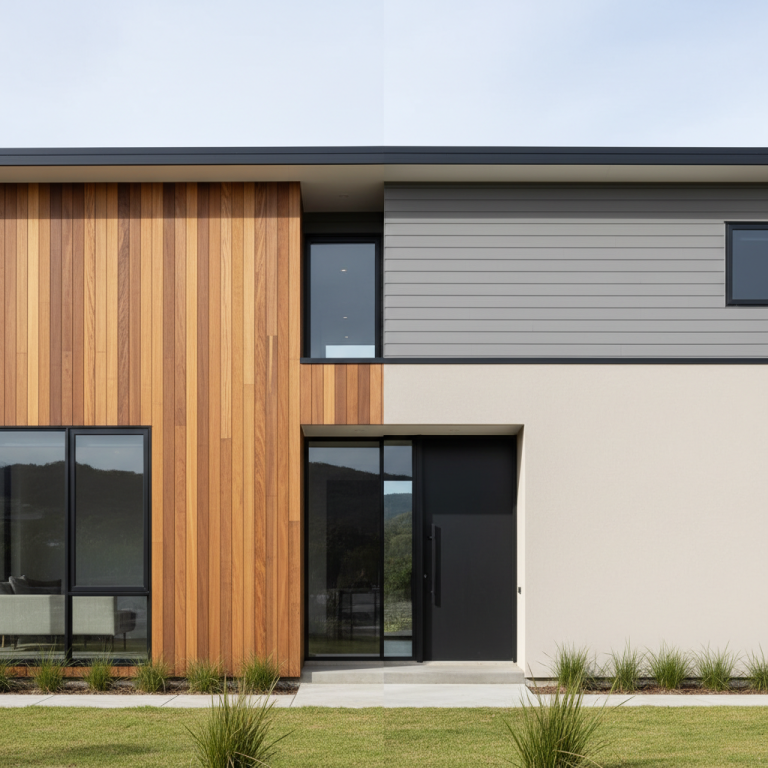
ThermoWood cladding is increasingly popular with architects for several reasons: the uniform dark colour provides a striking modern aesthetic, the dimensional stability minimises board movement, and the enhanced durability means confident specification in exposed locations. Available in T&G, shiplap and open rainscreen profiles.
Decking
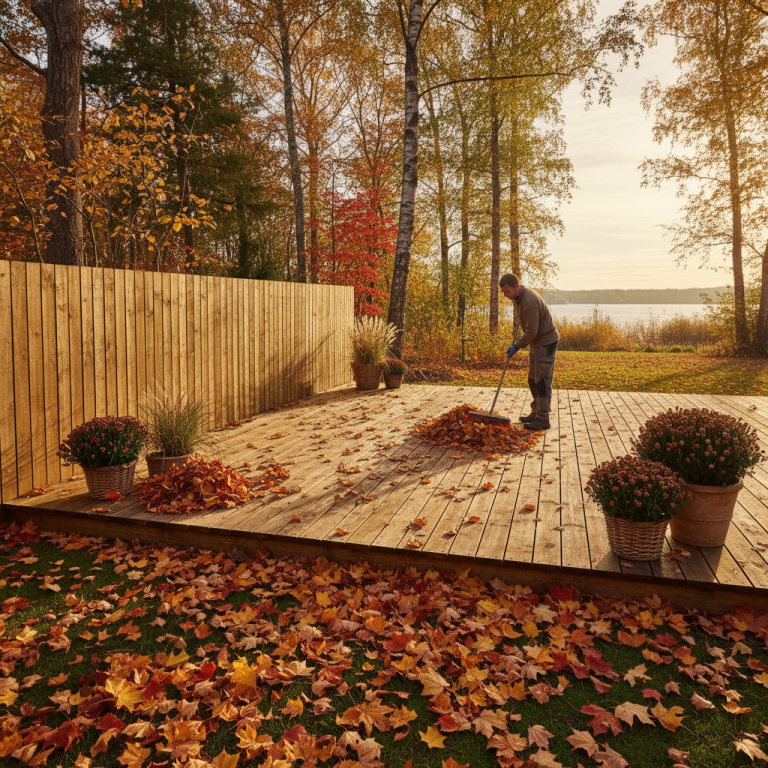
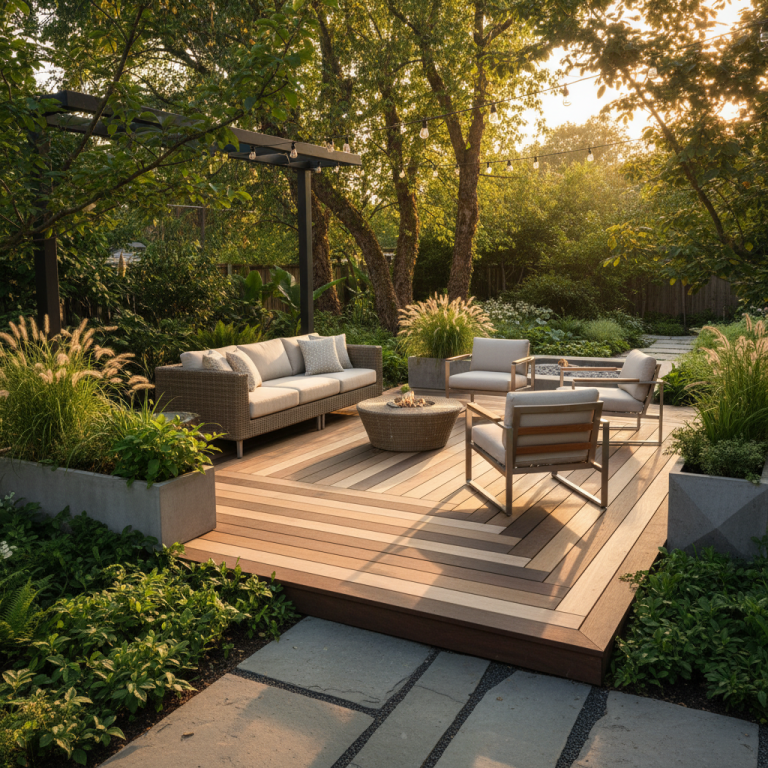
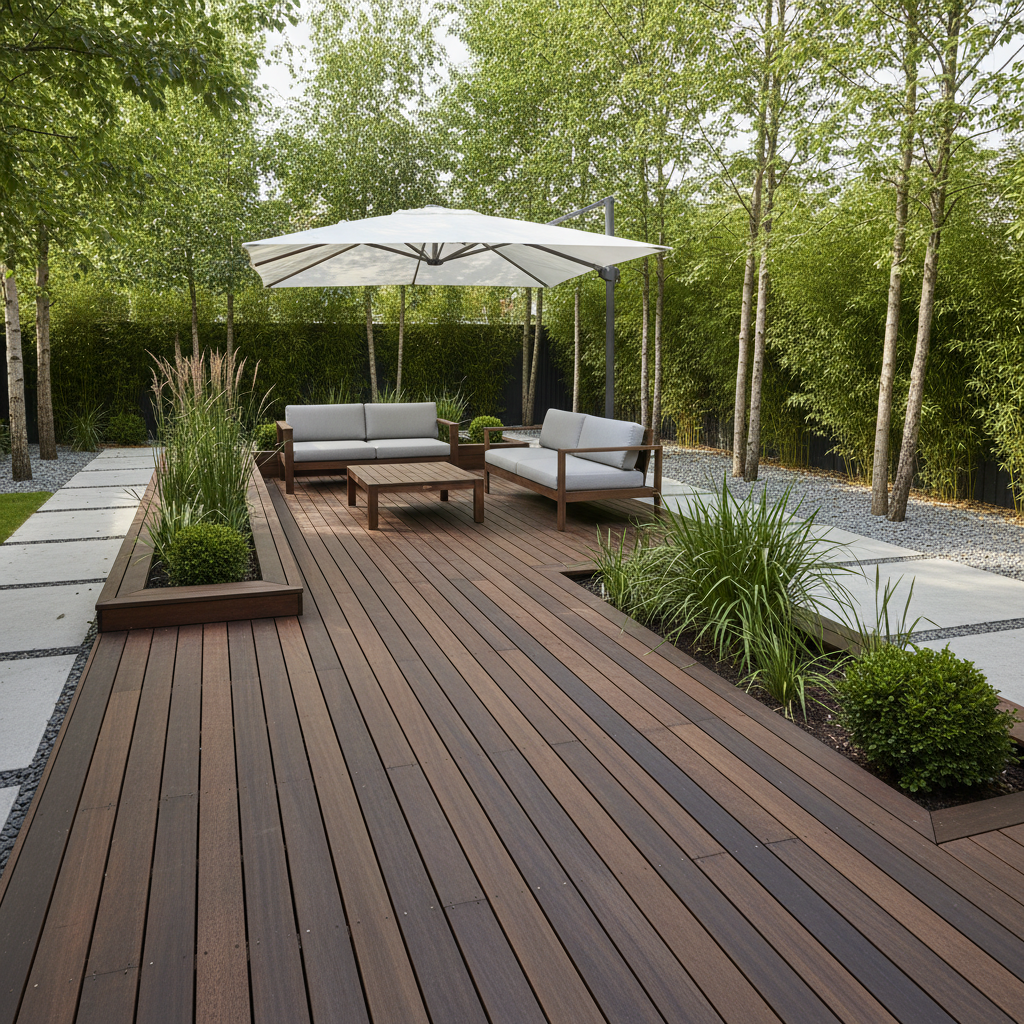
The reduced moisture absorption of ThermoWood decking means less seasonal movement and fewer surface checks compared to untreated softwood. The dark colour also shows less dirt and staining than lighter timbers.
Garden Structures
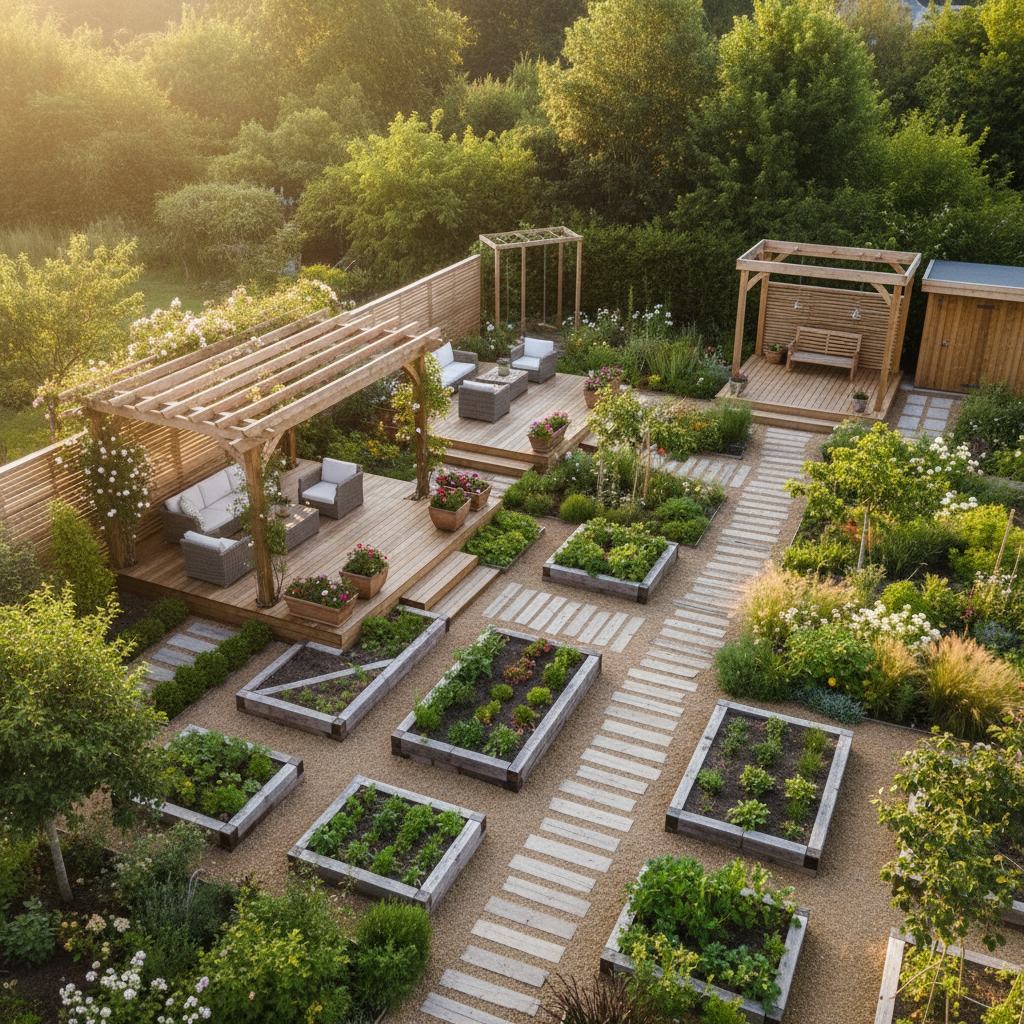
Pergolas, gazebos, planters and garden furniture all benefit from ThermoWood’s chemical-free durability — particularly important where food-growing or children’s play areas are nearby.
ThermoWood vs Other Options
vs Pressure-Treated Softwood
ThermoWood uses no chemicals whatsoever, making it the clear choice for eco-conscious projects and food-contact applications. It also offers better dimensional stability and a more premium appearance. However, pressure-treated timber remains more affordable for basic utility applications.
vs Tropical Hardwoods
ThermoWood achieves comparable durability to many tropical hardwoods at a lower price point, without the environmental concerns around tropical deforestation. It’s lighter and easier to work with, though it lacks the extreme hardness of species like Iroko or Sapele.
vs Siberian Larch
Both are excellent choices for cladding and decking. Siberian Larch offers natural beauty and proven performance at a competitive price. ThermoWood provides the deepest brown colour and the best dimensional stability. Many projects use both — ThermoWood for feature elevations and Larch for the remaining areas.
Maintenance
Despite its enhanced durability, ThermoWood will weather to a silver-grey over time if left untreated — just like any timber. If you want to maintain the dark brown colour, apply a UV-protective oil annually. OSMO UV Protection Oil is our recommended product, available from Timberulove.
Sustainability Credentials
ThermoWood scores highly on sustainability:
- Made from abundant, fast-growing softwood species (typically pine or spruce)
- Zero chemical additives — fully biodegradable at end of life
- Lower carbon footprint than importing tropical hardwoods
- PEFC or FSC certification available
- Extended lifespan means less frequent replacement
Is ThermoWood Right for Your Project?
ThermoWood is an excellent choice if you want maximum durability without chemicals, a consistent dark aesthetic, and superior dimensional stability. It’s particularly well-suited to contemporary architectural projects where clean lines and consistent colour are important.
Browse our ThermoWood cladding range or contact our team for samples and pricing. We stock ThermoWood in multiple profiles with next-day delivery available across the UK.